 BLOG
The Ship That Tipped Over in Florida: SS United States Becomes the World's Largest Artificial Reef
It is one of the most striking ship videos ever filmed. On Wednesday night, November 11, aerial cameras over the Gulf of Mexico watched the SS United States — 990 feet of floodlit ocean liner, longer than the Titanic — slowly heel over in the dark about 22 nautical miles southwest of Destin-Fort Walton Beach, Florida. Over long minutes she listed further and further, rolled onto her side, capsized, and slid beneath the surface, leaving a swirl of foam where the fastest ocean liner ever built had been.
Nothing had gone wrong. The tipping was the finale of a $13.5 million plan by Okaloosa County, Florida, to sink the 74-year-old liner deliberately and turn her into the world's largest artificial reef. And despite the roll captured on camera, the county has since confirmed the ending the engineers wanted: the SS United States settled upright on the seabed, in about 180 feet of water, within feet of her planned position.
▸ Why did they sink the SS United States?
Because the alternative was the scrapyard. Okaloosa County acquired the liner in 2024 specifically to reef her, after decades of failed plans to preserve and redevelop the ship — she had sat docked along the Delaware River in Philadelphia since 1996, outliving hotel, casino and museum schemes one after another. A final legal attempt to save her ended days before the sinking: on November 7, a federal judge in Florida denied an emergency restraining order sought by the SS United States Preservation Foundation to halt the submersion.
As a reef, the ship starts a second career. Her hull becomes habitat for tuna, marlin and swordfish in a stretch of Gulf that already holds more than 500 artificial reefs, and a landmark dive site: at 990 feet, she takes the “world's largest artificial reef” title from the aircraft carrier USS Oriskany, sunk off Pensacola in 2006. The county's tourism director has said its reefs bring in around $10 million to $12 million a year — the economic engine behind the whole project.
▸ How do you sink a 990-foot ship without explosives?
Slowly, and with plumbing rather than dynamite. Federal environmental and explosives rules barred the county and its contractor, Coleen Marine, from using explosives, so crews prepared the liner to flood in a controlled way: openings were cut into the vessel and more than 400 portholes removed. Flooding began at about 2:40 p.m. Eastern on Wednesday.
The ship refused to be hurried. The final descent was expected to take roughly 45 minutes once the flooding was under way, according to the Pensacola News Journal — instead, she took 7 hours and 19 minutes to go down. Part of the delay was precision work: crews filled 128 fuel and lubricant tanks aboard with water so the enormous hull would settle evenly on the ocean floor, county spokesperson Nick Tomecek told the Associated Press. In her last moments at the surface she rolled — the capsize in the timelapse — before slipping under at 9:59 p.m. Eastern, and coming to rest upright below.
▸ Where is the SS United States now — and can divers visit?
She rests about 22 nautical miles southwest of Destin-Fort Walton Beach and 32 nautical miles southeast of Pensacola, at 30° 07.148' N, 86° 46.755' W. The seabed there is about 180 feet down, but the ship is so tall that her top deck sits only about 60 feet below the surface — shallow enough, as the county points out, for less experienced divers to reach her most interesting upper decks.
On Friday, November 13, Okaloosa County confirmed the ship is resting upright, the safety zone around the site has been lifted and diving is permitted. The wreck will be studied as it becomes an ecosystem: the Woods Hole Oceanographic Institution, Dauphin Island Sea Lab and Louisiana State University will monitor how marine life colonises the largest artificial reef ever deployed.
▸ The fastest ocean liner ever built
The ship that went down on Wednesday was not a relic by accident — she was a record-breaker that never lost her record. The SS United States took the transatlantic speed record on her maiden voyage in 1952 and still holds it; no passenger liner has crossed the Atlantic faster since. She crossed more than 800 times in her career and measures about 100 feet longer than the RMS Titanic.
Her final journey took almost two years: towed out of Philadelphia on February 19, 2025, prepared for over a year in Mobile, Alabama, and towed to the reef site on the morning of November 9. The sinking itself was moved up a day, from November 12 to Veterans Day, because heavy winds and unsafe weather were forecast for Thursday — a last scheduling twist for a ship that, to the end, moved at her own pace.
▸ Watching the coast she now rests off
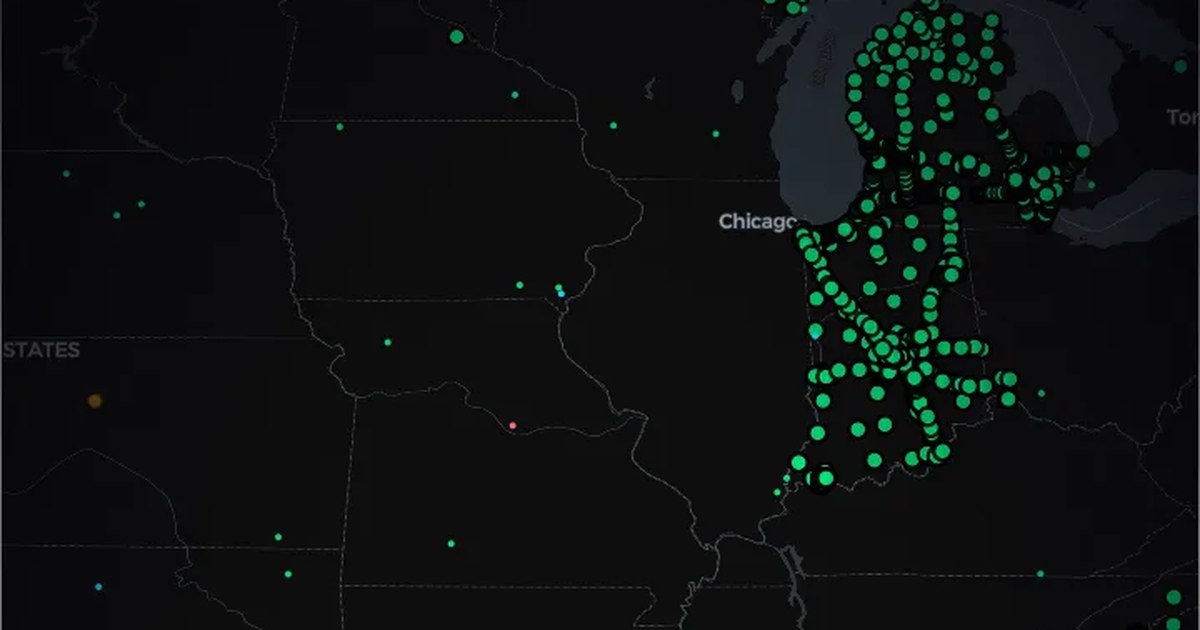
The sinking happened 22 miles offshore, at night, so no shoreline camera caught the roll itself — the famous footage came from the operation's own aerial cameras. What you can watch is the coast she now belongs to: WorldEye's beach webcams cover the Destin-Fort Walton Beach and Pensacola shoreline, the same stretch of Gulf now hosting dive boats heading out to the reef, and the live webcams map puts that coast in context alongside 74,229 cameras worldwide.
The reef site will show its changes slowly — first algae and baitfish, then the game fish the project promises, then, divers hope, a permanent underwater landmark. The ship spent 30 years waiting in Philadelphia for a second life. As of Wednesday night, she has one.
▸ Frequently asked questions
Why was the SS United States sunk?+
Deliberately. Okaloosa County, Florida, acquired the liner in 2024 and spent $13.5 million to sink her as an artificial reef and dive attraction, after decades of failed preservation and redevelopment plans in Philadelphia left scrapping as the other option.
Did the SS United States really tip over?+
Yes — in her final descent on Wednesday night, November 11, the floodlit liner listed, rolled onto her side and capsized at the surface, as seen in the widely shared timelapse. Okaloosa County has since confirmed she settled upright on the seabed, within feet of her planned position.
Where did the SS United States sink?+
About 22 nautical miles southwest of Destin-Fort Walton Beach, Florida (32 nautical miles southeast of Pensacola), at 30° 07.148' N, 86° 46.755' W. She rests in about 180 feet of water, with her top deck roughly 60 feet below the surface.
When can divers visit the SS United States reef?+
Now. Okaloosa County confirmed on November 13 that the ship is resting upright, the safety zone has been lifted and diving is permitted. Her upper decks, about 60 feet down, are within reach of less experienced divers.
What record does the SS United States still hold?+
The transatlantic speed record for a passenger liner, set on her maiden voyage in 1952 and never beaten. The 990-foot ship crossed the Atlantic more than 800 times and is about 100 feet longer than the Titanic.
▸ Sources
- Associated Press via Military.com: The Historic SS United States Is Sunk After a Long Goodbye Off Florida's Coast
- USA Today: How the SS United States was sunk to become an artificial reef
- Pensacola News Journal: SS United States took 4 hours to sink. Here's a recap
- Bucks County Courier Times: Why did they sink the SS United States?
See it live on WorldEye
This post is a snapshot — the planet keeps moving. The cameras, flights and events WorldEye tracks are streaming on the live globe right now.
Enjoying the free globe? Help keep it free.
WorldEye is independent and ad-free. Chip in to help cover the servers and data feeds.
One email when the sky does something big
Rocket launches, storms overhead and new camera drops — plus major WorldEye news. Rare, and no spam, ever.
Instant subscribe — no confirmation email. We check the address as you type it in.